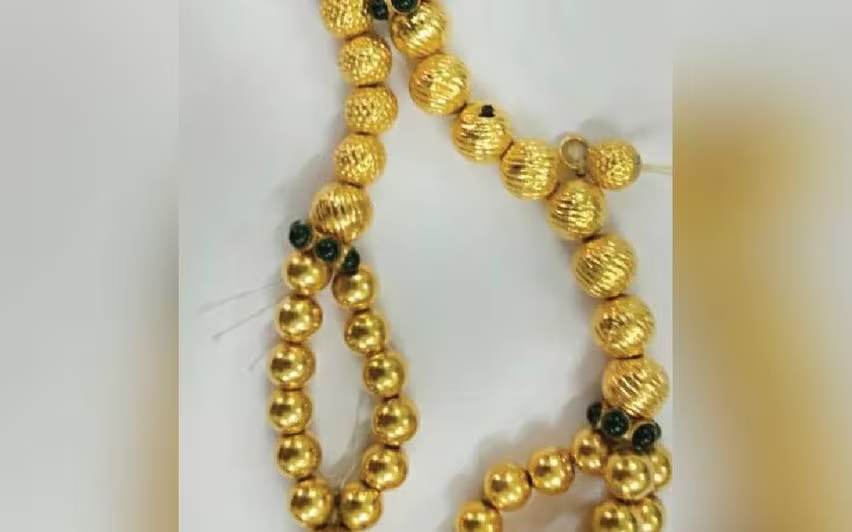
Kannur: A recent incident in Kannur has exposed a new modus operandi employed by fraudsters involving the use of wax to adulterate gold, leaving victims in the lurch. This incident transpired within the premises of a private gold pawn shop, shedding light on a concerning trend.
The suspicious activity came to light when an individual pawned a necklace, purportedly weighing three sovereigns, at a local bank. However, the customer failed to retrieve the pledged gold within the stipulated period. Upon investigation, it was shockingly revealed that the necklace, initially presented as three sovereigns of gold, was in fact partially filled with wax, thereby reducing its authentic gold content to two sovereigns.
What makes this deception particularly insidious is that wax-infused gold is nearly impossible to detect through conventional means, such as weighing or machine testing. The exterior of the piece maintains a 916-gold appearance, while its interior is surreptitiously filled with wax. This manipulation allows fraudsters to manipulate the item’s weight for fraudulent gains. It’s worth noting that wax-infused gold has become available on the market due to customer demand.
Banks typically employ counterfeit gold detectors, but these devices often fall short in identifying gold adulterated in such elaborate ways, leading to a rise in such fraudulent activities. Experts caution that even advanced tools like carat analyzers may struggle to uncover this form of adulteration. As a result, consumers and financial institutions alike must exercise heightened vigilance in dealing with gold transactions to prevent falling victim to these sophisticated scams.